Orchid 8 stems
- and we'll find out the delivery cost
- 1 person added the item to their collections
- You will get 324 bonuses
Watering frequency
2 times month
Size
- Width - 50 cm
- Height - 70 cm
Manufacturer
Blackrose cicekcilik, Turkey
Country of manufacture
Turkey
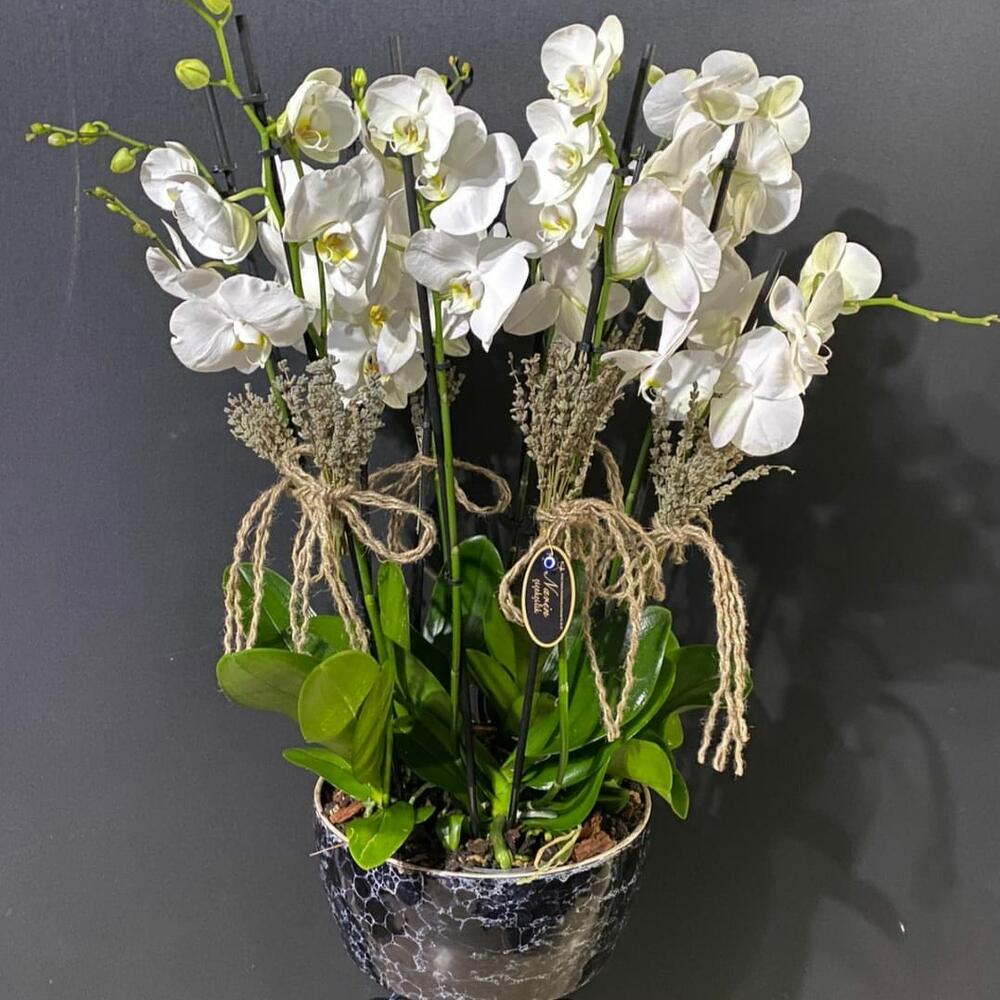
Orchid (Orchidaceae) is a popular plant species with elegant flowers and a captivating appearance. In particular, Phalaenopsis (moth orchid) is one of the most frequently cultivated orchid species in homes. With proper care, it continues to bloom for many years.
Care Guide
Light: They prefer bright but indirect light. Direct sunlight can scorch the leaves. A north- or east-facing window is ideal. If they don't receive enough light, the leaves turn dark green; with excessive light they may take on a yellowish hue. Watering: Watering should be done according to the condition of the roots. If the roots are gray, it's time to water. Overwatering leads to root rot. Watering once a week (more often in summer) is usually sufficient. Use room-temperature, chlorine-free water. After watering, make sure no water accumulates under the pot. Humidity: Orchids like humid environments. 50-70% humidity is ideal. You can occasionally mist the leaves to provide humidity, but be careful that water does not touch the flowers. Soil and Pot: Use special orchid mixes (containing bark, sphagnum moss, or coconut fiber). The medium should be well aerated and drain excess water quickly. Transparent pots are ideal for observing aerial roots. Also, light reaching the roots supports photosynthesis. Fertilization: During the growing season (spring–summer), use liquid orchid fertilizer every 2–3 weeks. You can reduce fertilization during the flowering period.
Orchid (Orchidaceae) is a popular plant species with elegant flowers and a captivating appearance. In particular, Phalaenopsis (moth orchid) is one of the most frequently cultivated orchid species in homes. With proper care, it continues to bloom for many years.
Care Guide
Light: They prefer bright but indirect light. Direct sunlight can scorch the leaves. A north- or east-facing window is ideal. If they don't receive enough light, the leaves turn dark green; with excessive light they may take on a yellowish hue. Watering: Watering should be done according to the condition of the roots. If the roots are gray, it's time to water. Overwatering leads to root rot. Watering once a week (more often in summer) is usually sufficient. Use room-temperature, chlorine-free water. After watering, make sure no water accumulates under the pot. Humidity: Orchids like humid environments. 50-70% humidity is ideal. You can occasionally mist the leaves to provide humidity, but be careful that water does not touch the flowers. Soil and Pot: Use special orchid mixes (containing bark, sphagnum moss, or coconut fiber). The medium should be well aerated and drain excess water quickly. Transparent pots are ideal for observing aerial roots. Also, light reaching the roots supports photosynthesis. Fertilization: During the growing season (spring–summer), use liquid orchid fertilizer every 2–3 weeks. You can reduce fertilization during the flowering period.
Part of the text on this page was translated automatically
Ratings and reviews
Sender
January 2026
Sender
November 2025
Sender
October 2025
10/10
Translate to English
Vladimir
October 2025
Как всегда безупречно! Рекомендую этот магазин!
Translate to English
Vladimir
September 2025
Report Item
Other items of this shop